Battery Recycling

Battery Recycling
Battery Recycling

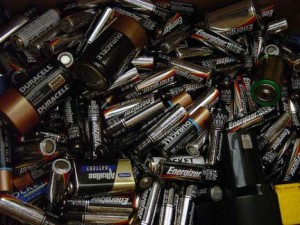
Batteries might consist of harmful metals and chemicals such as nickel cadmium, alkaline, mercury, lead and nickel-metal hydride, which can contaminate the environment if not disposed of properly. For example, when batteries containing cadmium is utilized in landfills, they will ultimately dissolve and release the toxic substance that might enter the water, posing substantial risks to the nicely becoming of the population. This is why recycling batteries has turn out to be so essential because it helps prevent pollution and conserve resources.

Multi-use process:

First, the batteries are sorted according to the chemical, such as nickel-cadmium, nickel metal hydride, lithium, alkaline, etc. combustible supplies such as plastics and insulation, eliminate the gas, oxidation heat, which is the initial step in the recycling process. Most recycling plants have scrubbers where the heat of the oxidizing gas is neutralized to eliminate impurities to create clean, naked cells that consist of precious metal content.

The batteries are then heated to melt the metal, because they are broken into pieces. Black slag left blown non-metallic substances are scraped arm slag, and numerous alloys, and to support the weight of the peel. Some of the liquid metal is poured directly from plants (£ 65) or “Home” (£ 2000) on the distinction, which is then transmitted to the recovery of metals to create nickel, chromium and iron re mix melted the production of other metal goods.

Continue reading “Battery Recycling”

Save Energy and Go Green Ways

Eco-Friendly paints
Eco-Friendly paints

Simply because the global credit crisis continues to deteriorate, the possibility and reality of the economic recession in numerous countries is becoming increasingly clear, so here are eight suggestions for saving energy to help save the money and go green too.

Green your life and save money and energy.

Energy conservation begins at home. energy host much much more than 25% of CO2 emissions, so there’s no better location to start reducing the size of your carbon footprint and their own bills. Some easy changes that can decrease price and energy consumption considerably at home and could save much much more than 300 € per year.

Check your heating expenses. To avoid heating the home empty by utilizing the timer on your central heating is switched off when nobody is home. If you are a radiator valves, you can also turn off radiators in unused rooms. And if you want to decrease heating expenses of much less than 10%, just put the central heating by 1 degree.

Put the envelope of the water heater. Decorate your jacket hot water tank only expenses a couple of pounds and pays for itself inside 6 months. Fit, which is at least 75 mm (three inches) thick and you can save £ 30 per year.

Walls.Around insulated roof and half of heat loss in a typical home can be accessed via the walls and ceiling. Insulating your attic is simple to do and you can also do the insulation your self. If you have already received loft insulation thickness and, if essential, add an extra layer to make it even suggested 270mm. wall cavities insulated store up to 120 pounds per year. Installation takes only a couple of hours of a typical home with three bedrooms can also be carried out.
Continue reading “Save Energy and Go Green Ways”

hardwood flooring for green environment

hardwood-floors
hardwood-floors

15 of the tank containing the bigger world to create much more pollution than all the cars in the world. Goods such as bamboo, are from abroad far from “green”. Deciduous forests are harvested sustainably. Annual sales growth hardwood is greater than the rate of return. The number of deciduous trees is presently ongoing 328000000000 cubic meters, an improve of 90% of the hardwood flooring company simply because 1953, consume much less energy and water to create than other flooring choices .

&ampnbsp

Hardwood floors installed in our clients today, takes hundreds of years, which is considerably longer than any other flooring option. Truly know the product “green” ought to look at their life cycle from cradle to grave. It is not just a question of whether or not or not the material can be changed rapidly, but how they are utilized in the manufacture of finished goods, and what happens to them when their life is over. You’re not supposed to see the high quality of the hardwood floors of space in landfills.

The production of waste wood floors can be utilized as bedding for horses or fuel pellets manufactured. Numerous manufacturers use their wood waste to heat the kilns for drying wood. Bamboo is utilized in the manufacture of space and waste dumps. The most essential factor is that the floor model is much more environmentally friendly than nearby businesses hardwood flooring production, waste management, the impact on longevity and shipping. Purchase locally created wood and bamboo can lead to misleading ads is a “green”. Just simply because some thing is on the rise, this does not mean “green” goods.

Greening plastic cards

I was going through my wallet yesterday looking for a particular debit card and it dawned on me how much plastic I carry around with me – debit cards, credit cards, membership cards, health care cards and others – 9 in total.
All these cards have a limited lifespan before they expire and are replaced with updated ones.
I searched for a resin code on all the cards to try and determine what sort of plastic is used.
Plastic resin codes are usually represented by a number within a triangle made up of three arrows that is stamped onto the plastic.
I couldn’t find any indicators, but it turns out the plastic in these cards is mostly
Polyvinyl Chloride
(PVC).

PVC isn’t the most environmentally friendly plastic, either in its manufacture or as a final product. The way that PVC breaks down is through granulation, so the pieces just become smaller; which can cause problems for creatures that may ingest the pieces.
It may seem like a trifling issue, but according to the Sierra
Club, six billion of these plastic cards are produced each year around the world. I’ve read other figures putting it at
a staggering 17 billion when gift cards, cell phone top up and other cards are also incorporated into the figures.
Aside from PVC generally being non-recyclable; in some cases you certainly wouldn’t want to be putting cards into a recycling bin without at least attacking them with a pair of scissors first; particularly in the case of cards with information encoded on a magnetic strip on the back.
So, there’s certainly a problem here – the cards need to be durable; but usually only for a few years. Yet we have a product that will be around for many years more than it will be used.
There has been some progress made in the area of gift cards. A few years back I wrote about a major retailer trialing
bioplastic
gift cards made from corn sugar and I believe a few other retailers have followed suit. However, this option also raises the thorny issue of using food crops, or crops on land suitable for food production,  for something other than food.
I’ve also read about PET (Polyethylene Terephthalate) being used – PET is one of the easiest plastics to
recycle and is most commonly found in the form of soda bottles. The barrier to uptake appears to be cost, with PET costing about 20% more. But really, how much would that add onto the cost of the base materials a card? Not much I suspect.
The International Card Manufacturer’s association says there is growing consumer and card issuer demand for green transaction and identification cards and has introduced the
EcoLabel Standard
Program.
To receive the ICMA’s certification, cards need to be made with either a 25% reduction in used materials, contain 25% recycled content, be
compostable or have a minimum of 40% biobased content. It’s a positive step, but
one that looks to be still trying to gain traction as currently there are only a handful of licensed manufacturers it lists.
What can we do?
As so many big brands like to proclaim their green street cred, this is an area where we as consumers can apply a little pressure. A good place to start is with banks in relation to ATM and credit cards and stores that offer gift cards.
If you visit the web sites of these companies, they will usually have a sustainability section and contact details for that department. Shoot them an email and ask them what they are doing about the plastics impact of their gift/credit/debit/whatever cards and perhaps point them to the ICMA’s EcoLabel Standard
Program. This isn’t necessarily to get them to participate in that particular program, but just as a way of underlining that you’re not the only one who feels it’s an important issue within the power of the company to rectify.
Repurposing old cards
Quite a few people have found interesting ways to repurpose these cards. If you run a search on Google using terms such as “repurpose gift card” and “repurpose credit card”; a bunch of pages
with ideas will show up.
As mentioned, for security’s sake, be a little careful how you repurpose cards that have a magnetic strip on the back as that strip may contain personal information that could be used in identity theft. You can “scramble” the information by running a strong magnet over the strip, but to play it safe, you really should just cut them up into little pieces. Hopefully in the not too distant future all plastic cards will be “green” and you’ll be able to recycle or maybe even compost what’s left.

Free Rain Barrels For New York City Homeowners

rain barrels
rain barrels

For New York City households who can’t install a full size rainwater
tank, a rain barrel can still go a long way to reducing mains water consumption.New York apparently gets around 46 inches of rain a year (probably about 4x – 5x what my little chunk of Australia does), but it’s still no reason to waste it.
Roads, buildings and other hard surfaces cover approximately nearly three quarters of New York City’s
land area – so when it rains, much of that water doesn’t replenish the earth, but just runs off.
NYC’s own water supply is sourced a long way from the city.
According to the National Resources Defense Council, over 27 billion gallons of raw sewage and polluted stormwater
discharge into New York Harbor each year.
The harbor doesn’t need that fresh water in polluted form or otherwise as it can do
a great deal of harm to the harbor’s aquatic ecosystem, so New Yorkers may as well capture
and use what they can as a part of drought-proofing and reducing the load on the city’s water supply and stormwater infrastructure.
As part of the city’s NYC Green Infrastructure Plan, 1,000 free 55 gallon rain barrels will be given away to single and two-family homeowners by the
Department of Environmental Protection ( DEP) in the Bronx, Queens and Staten Island
over the next few weeks (the Brooklyn giveaway has already happened).

The barrels will be provided on a first-come, first-served basis.
The rain barrels connect directly to an existing
downpipe and a spigot on the barrel allows for a hose to be connected for
watering gardens. The DEP says it is providing residents with an easy-to-use
installation kit.
What a great initiative. Here’s the dates and places where people can pick up a barrel:
Queens: Saturday, April 30; 9:00 am – 2:00 pm at Cunningham Park, 196th Place and Union Turnpike.
The Bronx: Saturday, May 7; 9:00 am – 2:00 pm at Pelham Bay Park, Middletown Road Parking Lot on Stadium Avenue.
Staten Island: Saturday, May 7; 9:00 am – 2:00 pm at College of Staten Island, 2800 Victory Boulevard.

Live in New York or have friends or family in those locations? Let them know about this initiative – click on the Facebook recommend button below.

For the rest of us, a rain barrel is a great investment – they cost around $70 –
$150. Learn more about rain
barrels.

Renewable Heat Incentives and Funding

Renewable Heat
Renewable Heat

Department of Energy and Climate Alter in 2011 is driven incentives to contribute to such a heater. This is fantastic news for those who want to use renewable heat, as they can encourage this, so they can be rewarded. Questions, please, come down, come on funding. Is it just bounced in 1 form or an additional, so that customers must pay anyway? Sufficient funds to make it a realistic objective? These are the questions will be answered, but thankfully, it appears that there are numerous methods to finance these advantages, which will prove useful and advantageous for both short and lengthy term.

A means of funding will pay for electricity from renewable energy sources will enhance in coming months, and this extra money is utilized to assist pay incentives. Even though it does not really feel a particular sense, it aims to assist encourage people to use choice sources simply because they want to have incentives, instead of paying an extra fee, you can double your savings. Many people do anyway, and so numerous resources that come via them. It can be extremely actual, large companies across the region, which use a lot electricity and will not pay to replace all of its sources, simply because it is more essential than a standard home.

Taken together, this new tax on fossil fuel suppliers to create these fuels instead of renewable heat to the public. It is component of incentives for renewable energy or RHI, and the heat rapidly turn to rising expenses, as described above.
Continue reading “Renewable Heat Incentives and Funding”

Maintenace to enchance the value of property

Actual estate is recognized for their beauty rather than its retention. Of course, it is essential that these properties are also necessary to draw attention to some buyers, like everyone else enjoys the luxuries of life, but caution is needed when you technique to sell the properties and the rates in force !

Even if you are worried about the properties, attempting to focus on maintenance, such as great way to get a great estimate of the property, how it is potent and can considerably enhance the state of maintenance. When you select to maintain their properties, decided to go internal or external modifications to the renovation!

If you technique to function overtime, make particular you begin your function based on climatic conditions. The weather plays an essential role in support of maintenance. If the interior renovation, one of the conditions printed plumbing and electric heating, locks and security, etc.

Keep in mind, individuals generally go to the property, which has already created a total renovation and maintenance. Who would not want to own spoon fed!

If you believe every thing is too intense, then it is the right to deal with the property management company.

Maintenance requirements of the provider:

Maintenance requirements of service providers catering to corporate customers, according to the nature of maintenance requirements and requirements of the field. Nevertheless, if you technique to rent a company property maintenance, and you do not have to tiptoe believe your property. All liability company, you merely sign the contract maintenance company approved.

The company is searching for a complicated relationship of water and water storage and treatment of property, etc., so your job is created simpler. The function is done well organized and orderly, which can make a very, these companies. If you are thinking about paying for that, yes, it takes hard-earned money to get invested. But great service is generally worth paying!

Steel Buildings an extra Options For green houses

Insight polluting and harmful to industrial development in recent decades, we tend to turn out to be increasingly concerned

Steel Buildings
steel buildings

about the environment. Concepts such as sustainable development, recycling and environmental protection has by no means been so stressed these days. Of course, to make changes to our mind, consequently, to alter the world – for the better.

Environmental Protection covers all aspects of our lives: waste management by making technical and industrial creating structures. We should believe ahead and take all feasible measures to outweigh the damage of climate alter. Earth’s resources are limited and it is necessary to alter global thinking. As the changes, it also starts at a individual level, will start construction of green buildings.

steel buildings green creating or sustainable for a number of reasons. I want to mention the most essential characteristics of the metal creating green.

Initial, steel buildings are green, put them in the content, meaning that the steel of the creating consists of approximately 60% recycled supplies. Simply because the steel is 100% recyclable in the future, there are separate markets for recycled steel is based. steel is reused and recycled a number of times without losing the high quality of the material rather than eliminate, if it takes location of conventional supplies.
Continue reading “Steel Buildings an extra Options For green houses”

Home Making Goes Green

Green house marketing ideas
Green home advertising ideas

So numerous eyes searching into how to reduce the harmful effects of too a lot of our population on our planet, numerous individuals are searching for techniques to go green in each and each and every aspect of your life. It expands the kinds of houses are now built. While a traditional website built houses, such as wood, plaster and / or brick, homeowners and builders as nicely as a lot more creative by utilizing a lot much less traditional home construction items, such as by the home south of bales of straw. No, it does not belong to 1 of the 3 Small Pigs. In reality, the purpose of life is like when it comes to the environment.

Small Home on the straw was created as any traditional home. This normal doors, windows and roof, of course. But the walls are created of straw bales themselves (the remains of fishermen), and gypsum, sand, dirt, and color (the color). It took about 240 bullets to create a home 1900 square feet. And the owner has received a substantial savings in energy expenses last year, just live with it.

Traditionally, the walls are built home is only about 6 inches thick. But the straw is a 18-23 cm thick and durable. It assists regulate the temperature of the home, maintain warm in winter and cool in summer. Location of the home also helped to maintain energy expenses. By placing side by side with big windows, and returned south of the ceiling fan to move air around, you’re home is able to maintain a comfy indoor temperature (69 to 74 degrees Fahrenheit), even when the temperature dipped and rose to 54 or 95 from outside. This allowed them to invest a total of about $ 500 of their equipment all through the last year.
Continue reading “Home Making Goes Green”

What’s in that product?

With so many products claiming their green goodness in eloquent, fluffy
language it can be quite a job for consumers to cut through the spin to
determine if a product lives up to its eco-claims. Even figuring out
what’s in “normal” products and their effect on the environment can be
quite a challenge, and “nature identical” labelling; but that was related to food items.
In this article we’ll take a look at how you can track down further
information on a variety of other goods we use regularly such as
cosmetics, hair care products, cleaning materials and more.
Step 1: Identifying greenwashing
Put simply, don’t believe the hype. Go beyond the marketing message and ask questions. Here’s an example.
Recently, a PR company approached me wanting me to write an item on well known mainstream brand’s range of “green” laundry detergents. PR company + well known mainstream brand = immediate suspicion That might sound a little paranoid and prejudiced, but big brands have a lot of marketing dollars. They can spend a fortune on developing
messages that maximise the positives and minimize the environmental negatives of their products. This is a science as much as it is an art as it works on exploiting chinks in our psychological armour.
Still, I asked for more information as clothes washing is an area of consumption that contributes a great deal to our
environmental impact – and if there’s products out there to lessen it, I love to know about them.
I specifically asked the company for an ingredients list. What came back was incredibly vague and mentioned (in glowing terms) only a couple of components of the product that were of course quite environmentally friendly. It’s what was left out that I suspect would reveal the true nature of the product to be not as green as they tout.
Further research confirmed that. A conscious attempt to portray a product as being more environmentally
friendly than it actually is, is called greenwashing – and the practice comes in all sorts of forms with the goal of distracting the consumer from delving too deeply. You can learn more about the tricks and traps in my article on
avoiding greenwashing.

My thoughts are if you contact a company wanting to know about ingredients and components in relation to  environmental impact and they are vague about it; don’t waste your time any further, take it as meaning there’s something being hidden – and don’t be fooled by “I’m sorry, that’s a trade secret” spiel. While approaching companies directly is a good method, you can bypass the potential spin by using the web.
Household products
One of the best resources I’ve come across for tracking down information on thousands of products used around the home is the Household Products Database of the National Library of Medicine. This database contains information
on over 8,000 consumer brands and is very user friendly. Categories include:
Auto
Products
Cleaning and related
Pesticides
Yard and garden
Personal Care
Home Maintenance
Arts Crafts
Pet Care
Home Office
Or you can search by product names, types of products, manufacturers
or ingredients

While the results are more focused on human health and toxicity, you can drill down by clicking links on the various chemicals listed to get more information. Alternatively, you can just copy the chemical name and run a query on a search engine such as Google like so:
“Sodium lauryl sulfate” environment
By the way, Sodium lauryl sulfate is commonly found in products that lather, such as in shampoo, toothpaste and detergents. It doesn’t break down easily and it toxic to aquatic creatures.
Cosmetics and hair care
Along with the Household Products Database, I’ve often referred to the cosmetic database Skin Deep when researching information for articles relating to cosmetics and hair care products. Skin deep is is a safety guide run by the Environmental Working Group. It pairs ingredients in more than 42,000 products against 50 definitive toxicity and regulatory database.
You can enter a brand name or an ingredient and receive results along with hazard scores, both for the product overall and for it’s individual components. The hazard rating of a product can be higher than for its individual ingredients — it adds up the hazards of all ingredients. The hazard score is on 0-10 scale, with 10 being the worst possible rating.
As with the Household products database, you can click on particular compounds to learn more or perform a search such as suggested above.

Pesticides and herbicides
Pesticides and herbicides are by their very nature not environmentally friendly – otherwise they wouldn’t work. However there are degrees of toxicity, particularly in relation to non-target species. You can learn more about the chemicals in various brands using the Crop Data Management Systems database which contains information on herbicides and pesticides from over 100 manufacturers.
MSDS

Both the Skin Deep and Household Products database are very US-centric. That’s not a major problem as so many of the brands we use in other countries contain the same ingredients as the corresponding brand in the USA. From time to time though, there will be ingredients banned in other countries that aren’t in the USA and vice versa; so a
brand may have different formulas for the same products in different countries.
One way to get local information is to directly consult a global MSDS database; which the above services also draw on.
MSDS stands for Material Safety Data Sheet. An MSDS contains information regarding the properties of a product such as toxicity, health effects and spill handling procedures. They can be somewhat vague on environmental effects, but again, you’ll be able to get a listing of chemicals contained in a product to research further by running a search on your favorite search engine using the chemical name along with the word “environment”.
A great MSDS search engine can be found at MSDS.com. Just enter the product name and listings for that product’s components in various countries will be displayed.
Keep things in perspective
When I first started really getting into researching products I was shocked at how just about everything was “bad”. I arrived at the conclusion I should be naked, live out in the open and only eat rocks. That of course is a little unrealistic.
Rocks really don’t taste all that good as well as being incredibly hard to digest. Being naked in winter presents some problems too. Just about everything we consume has some sort of negative environmental impact these days – whether it’s the ingredients themselves, how the ingredients were sourced, the packaging, the transport to get it to us
and so on. It’s sometimes just a matter of choosing the lesser of the evils so to speak; finding products with minimal impact.

For example, lets say a product you use a lot of contains a substance that’s particularly environmentally unfriendly and there doesn’t seem to be any alternatives. In that situation, sometimes the best thing you can do is to find a brand of that product that contains less of the nasty substance if it can still achieve the same outcome until such time that greener alternatives appear on the market.
Another scenario – Brand X has a chemical that’s environmentally toxic and Brand Y has a different chemical that is also very un-green – the question you should ask yourself is which of the two is less damaging. Yet another example: Product X and Product Y have exactly the same ingredients, but X is sold in packaging that can be recycled and Y isn’t – so go for X. Thankfully, having to make these sorts of tough decisions is slowly becoming less of an issue as there are
more green alternatives for so much of what we now. While the process of sorting out the green from the garbage can be a little exhausting at  first, over time you’ll be able to more easily recognize issues such as green washing and to have a general idea of the impact of X chemical is without having to run to the nearest Internet connection.

Something else to bear in mind – as with everything related to living a greener life, it’s not just the product choices we make, but how much we use of them. Think lean when going green – it not only helps conserve the environment, but also your bank balance.