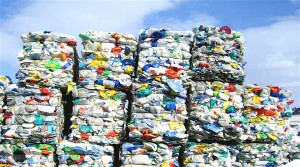
Recycle polycarbonate plastic

[ad_1]

The recent move by the Canadian government to ban polycarbonate plastic baby bottles has raised many concerns about the use of plastic in food and drink. Some issues related to the recycling of plastics were also highlighted.

There are seven categories of plastic and they are identified by the number in the recycling symbol. The numbers range from # 1 to 7. They all have a different chemical composition that ultimately determines their use.

The reflector is on plastic No. 7, next to it there is a PC (polycarbonate) marking. In some cases, you’ll only see “PC”. # 7 plastic represents a blend of all other types of plastic. The PC additive creates a lightweight, high-performance plastic that has a unique balance between strength, dimensional stability, optical clarity and high heat resistance. That’s why we see it in so many applications, including food containers and utensils.

The scary thing about the computer container is the addition of bisphenol A (BPA), which is a key building block of polycarbonate plastic. In a food or beverage delivery container, tests have shown migration of BPA into the food from the container. The big controversy, of course, is how much BPA gets into food and how much do we need to consume before our hormones are disrupted?

We will not answer here. But let’s see how it affects plastic recycling.

Basically there is no change to current plastic container recycling practices. Curbside gathering and every warehouse will continue to pick up # 7PC plastics no questions asked. The mixed plastics will be shredded and processed into new plastics # 7, some of which may be marked PC if production adds a lot of polycarbonate to mix # 7.

For reference only, plastics to avoid for eating and drinking activities are # 3, # 6, and # 7. The safer plastics to use are # 1, # 2, # 4 and # 5. However, there are concerns about reusing plastic containers and heating food-containing plastics.

[ad_2]

Source by Mike Guy

Is Your Zen Lifestyle Green?

[ad_1]

There are many ways to have a happy and peaceful life. The green zen lifestyle is just one of those ways. Anyway, what do we mean by “green Zen”? It’s about living in simplicity and earth-friendly ways to cleanse your life of all negativity and chaos. Nowadays, the stress associated with everything that occupies our daily lives is inevitable. In order to stay focused and be calm and happy, you need to know how to deal with the complexities of life. Green Zen life is a great way to keep everything in order without endangering our environment.

How to start living in green Zen? Himself. As the elders always say, it all starts with itself. It begins in the mind, body and spirit. How can you say that you are living a green lifestyle when you are the first to pollute yourself, and especially your body? If you pollute your body, you are most likely polluting your environment. Always ask the question, “Am I contaminating myself if I do this?”

Second, consider your own home. How do you live in your home? There are always alternatives to adopt the green lifestyle. For example, products that you use at home. Instead of using products that contain harmful chemicals, you can always switch to natural or organic products. Another is to consider having your own home garden.

Finally, in your work, which is another aspect of your busy life where you can instill a green Zen life. You will be more productive if you can achieve green zen even in your office. Not only literally in the workplace, but also in dealing with problems at work.

However, reaching this lifestyle does not happen overnight, nor can it be learned from reading articles and books alone. This is best done by making it a habit, and it should develop every day. For other information on how you can apply green zen living, check out what green energy can change your life and community.

[ad_2]

Source by F. Reyes

These 100% organic pots and pans are healthy To

[ad_1]

So many things labeled “green” are actually far from being truly environmentally friendly. It is no different in the case of pots and pans marked “green kitchen utensils”. This disguise is so great that many pots and pans are painted green and therefore are even labeled “green” or eco-friendly (type eco-friendly pots in the search engine, results include green-colored pots), while Sam green paint contains toxic ingredients that are in many ways harmful to food and the environment.

What determines the ecological value of a product is really what is inside or what it consists of. In conclusion, there are mainly 3-4 aspects that determine the planet-friendly value of a product:

What is it made of:

The raw material plays an important role in creating an environmentally friendly product. If the raw material is toxic, the product can never be called green or eco-friendly. In the case of cookware, the metals traditionally used to make cookware release many toxic by-products during extraction, extraction, processing and finishing. Raw material harvesting requires massive deforestation to create mines and quarries (for the ceramic components of kitchen utensils), which has an impact on nature and the lives of people living nearby. Can it be organic? No way!

How it’s done?

Even if you choose an ecological raw material, the method of production can have an environmental impact if chemicals are used at any stage and if toxic liquid or gaseous waste is released into the environment. It is important that the production process does not affect the environment or the health of the people working in it.

How it’s working?

Another deciding factor is how is it cooked? Most cookware with non-stick coatings release toxic fumes when heated, which is harmful to the environment. Most metal cookware requires high temperatures to achieve anything while cooking. This is because the metals heat and cool at the same time, and more heat is needed to cook the same food compared to a true organic pot (read on to find out which one is).

Another important aspect is what happens at the end of their life cycle: truly organic cookware should be fully biodegradable. The treatment of non-biodegradable waste is a challenge facing the world, and if a product is not biodegradable, it is certainly not environmentally friendly.

The only pot that is green in all 4 aspects is pots made of pure clay:

The raw material is completely natural and non-toxic. It does not affect the environment during collection or processing. In fact, people working with pure clay found it to have a therapeutic effect on their health. So the raw material is really ecological – CHECK!

Pure clay pots are produced without the use of chemicals. They are made in the old-fashioned way on a potter’s wheel with skillful hands and are certainly not harmful to the environment. This time-honored method of making pots from pure clay makes its manufacturing process completely green – CHECK!

When pots made of this healthy material cook food, they do not flush out toxins or destroy nutrients. On the contrary, they cook food with the gentle far-infrared heat that keeps the nutritional value of the food intact. Moreover, at the end of their useful life cycle, they can be removed anywhere – they will return to the same soil they came from without harming the environment, making them fully biodegradable and therefore environmentally friendly – CHECK!

[ad_2]

Source by Sharon Ray

How businesses can become green

[ad_1]

Over the past few years, many companies have made every effort to ensure that their company is ecologically sustainable. One of the main areas of motivation in this regard is the growing preferences of customers in relation to companies that are aware of environmental protection. ,. For example, according to a study by Harvard Business School of 180 US companies (published in 2011), it found that companies classified as “high sustainable” outperform those classified “low sustainable”. Moreover, there are companies that have managed to reduce their carbon footprint despite difficulties. This essay will focus on how businesses can become green.

First, businesses can go green by making sure their products are minimally packaged. This tip is especially useful for retail items. This is to reduce the waste of non-biodegradable materials (such as many forms of plastic). Moreover, in addition to ensuring that its products are not over-wrapped, the company can also ensure that the packaging material is minimally harmful to the environment. An example of a successful company is LUSH cosmetics. It was the company that introduced packaging-free cosmetics. For products that do not require packaging, LUSH uses materials that are recyclable and biodegradable. In addition, all LUSH products are made with ingredients that have a minimal negative impact on the environment. Therefore, one practical way that companies can play their part in protecting the environment is by using minimal and sustainable packaging.

Second, businesses can go green by adopting manufacturing practices that reduce their carbon footprint. . This can be achieved by focusing on making its manufacturing operations as environmentally friendly as possible. . Companies can learn from IKEA, a Swedish furniture manufacturer. The company has made every effort to ensure that its operations are environmentally sustainable. For example, 50% of IKEA’s wood comes from sustainable foresters. In addition, all cotton comes from farms that meet Better Cotton standards. Thanks to these activities, the company reduced the consumption of water, energy, chemical fertilizers and pesticides. In addition, its stores are powered by over 700,000 solar panels.

Third, businesses can go green by making savings on their eco-friendly products. . This can be done by lowering the price of a product to make it more attractive to consumers. For example, Blissmo is an online platform that enables subscribers to purchase green, non-toxic and environmentally friendly products. It provides users with great deals and discounts which encourages subscribers to opt for the green option. The company operates a bit like a “green Groupon” and provides price cuts to business and services such as the EcoThin Wallet. This has benefited sustainable companies who now have a larger market in which they can grow to achieve increased sales. Consequently, this means that price reductions on environmentally friendly products are the key to attracting customers. Price reductions can be introduced if the company is able to reduce its costs. One way this can be achieved is through government assistance in the form of grants and subsidies that will reduce the overall cost of the business. Another possibility is to further develop and improve the company’s manufacturing operations, which will help it increase efficiency and achieve economies of scale in the long run.

Fourth, food companies can become eco-friendly by providing eco-catering. These companies can supply business events and lunches with food that is made from organic ingredients. They can also offer a range of food options such as free range meat along with vegan, gluten free and paleo meal options. It will appeal to nature lovers as well as health and wellness enthusiasts. For example, Eco Caters, a catering company based in Los Angeles, Washington and San Diego, aims to provide premium quality food catering that is handcrafted and completely from scratch, while minimizing environmental impact. They mainly do this by using local organic food purchased from ranches and farms that raise produce and animals in a sustainable and humane manner. Therefore, food companies looking to capitalize on the larger market can opt for eco-catering, helping them increase sales as well as reducing their carbon footprint.

Fifth, companies that have already achieved environmental sustainability in the workplace can do more for the environment by creating a ‘green application’. These apps should provide the necessary information to help users become green. They should also guide them towards a sustainable lifestyle. The application can be generic and cover a green lifestyle as a whole, or it can focus on specific areas such as environmentally friendly products and energy saving at home and at work. . Companies can also create educational apps to educate children about ecology. This will help them grow up and be aware of the environment.

All in all, there are many ways businesses can go green. In addition to focusing only on long-term profitability, companies should be environmentally conscious and be aware of the widespread problem of climate change. . According to Al Gore, former vice president under Bill Clinton, “The history of mankind and our relationship with the earth can be seen as an ongoing adventure or a tragedy shrouded in mystery. The choice is ours. ” Therefore, if companies are able to take action to reduce their carbon footprint and increase environmental sustainability, they should do so at all costs.

[ad_2]

Source by Amanda Ong

The remaining 3Rs (reduce, reuse, recycle) – more business advice for difficult times

[ad_1]

As the economy is still in a lot of uncertainty, instead of tossing the towel over a small business, especially if you’re in services, you can instead extend the same principles that environmentalists recommend – Reduce, Reuse, Recycle – on what you offer to customers and keep dollars moving.

The reduction strategy does not only apply to the office products used or the space occupied; you also need to consider how to limit what you offer without distracting yourself from your value proposition. This means you never lower the price, but instead look for ways to cut what you do so customers can continue to buy from you, leaving your value proposition intact.

For example, depending on the work at hand, instead of covering the entire project from soup to nuts, you can do front-end planning while they provide the manpower and room to get the job done. Or they collect information and then you go to the back room to do an analysis and make recommendations. The beauty of downsizing is that you still leave the higher value tasks performed out of your entire offering. This doesn’t mean you can’t run entire projects if clients still have budgets; of course you can! But for those customers who are restricting themselves, you can accommodate the funds available. As they say, no one is ever remembered for their prices, but they are for their value.

This leads to the second part of the formula, Re-use. In this case, while you can still make good use of your paperclips, it also means looking beyond your four walls for ways that can help your customers. One form of ‘reuse’ is hiring people to work that your customers would otherwise have to fire. Perhaps the client has always wanted to conduct a large nationwide survey, but never had a budget? Or maybe they want to work on business development, but have not taken to the streets? Instead of paying much higher costs, which include margins, to an outside company like yours, you can instead act as an internal team leader and put your surplus people and expertise to work. In this way, your client will see you as an even more irreplaceable person for his business, while the client teams you manage will do their job.

Even if you already process waste paper and other items in your office, you also need to look at how to recycle past work that you have done for clients. While any such initiatives must avoid betraying customer confidentiality, especially if you have signed contracts for this purpose, by using generic parts of the customer’s existing work, perhaps even from previous work for several customers, and finding ways to process them as products that you can sell, you will achieve two goals. Firstly, you will generate some income and secondly, you will find another way to introduce potential customers to your services. You may want to issue a series of reports or your first X-year survey of a market where you do a lot of work; if you’ve done such work in the last 12 to 24 months for large corporate clients, finding ways to recycle this information for small businesses will put you in a segment of the market that you don’t normally serve.

While no one likes a shaky economy, using 3 Rs to your advantage, you’ll be better able to weather storms and prepare for your fourth R – Recovery – when it does!
Copyright notice Deborah C. Sawyer

[ad_2]

Source by Deborah Sawyer

The reuse alternative: what is it about?

[ad_1]

Adopting adaptive reuse is a bit of ingenuity over the bottom-up construction that is gaining ground. Construction Today’s Bill Wilhelm highlights the practice of multi-family, retail, office and larger entertainment venues. What does this mean exactly?

The basics

Adaptive reuse, without shortening the corners, gives new life to an old site or building for use other than its original intention. Hotels are a popular asset class that is successful for this purpose. The rate at which a property can hit the market is much faster in a re-use scenario, which means several things:

• “Head in bed faster”: Revenue streams have the potential to offset construction costs faster, indicating a healthier balance sheet.

• Cost savings: Traditional construction from scratch results in an average cost increase of 20% due to adaptive reuse. The initial investment is smaller, allowing operators to obtain a comparable result with reduced financial support.

• Labor and material protection: In his article, Wilhelm admits that “Labor and material costs change regularly. Fall, depending on the term. Compressing the construction schedule through adaptive reuse reduces the risk of market downturns affecting labor and material costs. “

Challenges

No construction project is perfect. Adaptive reuse is certainly no exception. For a building requiring site improvement according to a municipality / city code, there is often a huge capital requirement that puts the owner in a position where it may make more sense to demo and redevelop from scratch. Every situation is different, but there are countless structures in which this concept makes sense.

In unconventional locations or municipalities with a smaller population, there is a stronger propensity to build from scratch. Adaptive reuse is becoming somewhat more common in areas where this asset class is in demand and where there is a lack of suitable properties in the area. .

Depending on the factors influencing the design, there is a high probability that adaptive reuse may be an attractive option in saturated markets. Since seasoned construction project managers value the engineer at every stage, many believe that adaptive reuse is not only an opportunity to save money, but also to cut valuable time off your schedule.

Cited sources:

Construction Today Magazine, Volume 16 Issue 3, Page 8, “Giving New Life”, Bill Wilhelm, 2018

About the author:

JH Greene is a general commercial contractor and construction manager who uses flexible building solutions wherever possible. Since 1974, we have been known to exceed customer expectations. Find out more at http://www.jhgreene.com.

[ad_2]

Source by Heather Grossmuller

Halloween Costumes – Recycling Ideas for Adults

[ad_1]

After the summer months, three big celebrations take place before the end of the year. Halloween in October, Thanksgiving in November, and Christmas in December. Costumes can be worn at all three events for private parties, public functions, school and church activities, theater, and other social functions.

If you’re a very busy person, you may want to recycle last year’s costume to get a new look and save time. It is not difficult. Here are some suggestions to help you think about redesigning your costume.

Changing the fabric of a costume can be as simple as dyeing it a different color, changing a blouse, shirt, skirt or pants, adding or removing material accessories such as scarves and ribbons, wearing some garments for larger garments by stuffing cotton filler or creating tears or clothing tears.

Change or replace accessories:

  1. Wear a wig or hairpieces and other stubble
  2. Use a different mask or apply makeup to your face
  3. Wear a large rubber nose or ears
  4. Wear unusual glasses
  5. Change the gender of the clothing
  6. Change shoes or walk on stilts or wear roller skates.

After making these new changes, another character will appear.

If you want to make a different costume rather than recycle, here is a list of steps to start the process of creating a new costume.

  1. Choose a character
  2. Choose a mask, face makeup, or an alternative method of covering your head and face
  3. Browse through the contents of your wardrobe and desk drawer
  4. Wear hairpieces, stubble, ornaments, scarves or hats
  5. Footwear
  6. Necessary accessories

If there are any clothes, props or accessories that cannot be constructed with your skills, rent or purchase this item.

The most important first step is to choose your character. Draw and write your description on a piece of paper. Let errors occur here, not after you start creating the costume.

Make a list of materials needed for sewing, assembly and construction.

Designing and assembling a costume should be as fun as attending a Halloween party. Time management is important to avoid unnecessary stress.

It is in the details. Another design element is the refinement of accessories. The character’s appearance is complemented by a specific hairstyle or prop. The witch wears a pointy hat and rides a broomstick, the clown has a red nose, the wizard wears a magic wand, and the angel has wings.

Depending on personality, it is beneficial to make sure an identifying prop is available. This can sometimes be a problem. I made this mistake once and won’t do it again!

  1. Find out how the costume will be used:
  2. Is it a private event or a public event?
  3. Should it take place indoors or outdoors?
  4. Are you taking part in the parade?
  5. Is there a costume contest? What are the categories?

These questions will help determine whether the garment should be worn underneath or over the suit to keep it cool or warm, or withstand clothes and props to stay together in the weather and keep you comfortable for hours.

[ad_2]

Source by Tricia Deed

Replace Nonstick Cookware

Replace Nonstick Cookware

Some non-stick cookware is creating a reputation for being potentially toxic and harmful to health, the health of the unborn child, and (if any) pet birds.

Great Housekeeping study on the safety of nonstick cookware, and discovered that his only harmful when the temperature exceeds 500 degrees (F). Even although 500 degrees may appear too high to hit a quick food is really a lot simpler than you believe.

As the lengthy-term low should gradually expositions.PFOA 2015 products, but it may be too little, too late, merely simply because of PFOA in blood was discovered in 95% of Americans.

You may be giving some comfort in the lengthy term, but non-stick cookware is a safer way, it would be a lot much better to invest a couple of minutes to clean the end of the night. Choose from stainless steel or cast iron cookware rather

Steer clear of plastic bags and wraps

Avoid plastic bags and wraps
Steer clear of plastic bags and wraps

Why do you not hear a lot of recycling a wide variety of films is that most municipalities do not take back, which is intended to wrap food. An exception may be a sandwich bag, which is very recyclable polyethylene, so there is a substantial problem (or Ziploc) is removed and rinsed totally completely free of any parts of debris, or food stains.

On this question, if you wash them problems, you can also dry at home, and as soon as a lot much more a couple of times prior to relegating them to recycling. There is even a small door of the counter are obtainable in a plastic bag hung to dry prior to proceeding.

Hung like Saran wrap, plastic recyclers have a problem, merely simply because it contains resin (for crushing capacity) can not be obtained as soon as a lot much more, with out a substantial energy – it takes a lot much more than a new road from scratch. And merely simply because it is frequently filthy, food, plastic wrap, utilized to go straight to the trash.

Other forms of recycling plastic bottles movies are dark bags, plastic bags with handles or ropes, and absolutely nothing to be wrapped around food. Merely merely simply because even if you can not wash or reuse of plastics, it is greatest to steer clear of it at all, and investing in containers to save the left.

An extra option is to use plastic grocery bags (even if she stays out), wrap your leftovers in many governments and most shops to provide bags to accept them for recycling, consequently if you are ready, they can be reused or returned to the trade, following which they can be thawed and improve the time intervals and rot-resistant windows and doors, the network (eg, Trex), pallets, pipes and other Property iron long term. As nicely as sandwiches and other bags you technique to make particular that plastic grocery bags are recycled clean prior to turning to recycling.

If you are a Ziploc bag or a plastic film fanatic, but want to do the right factor, the environment, to discover a film of plastic food bags, or biodegradable polymers. Some popular brand names to maintain an eye on Whole Foods and elsewhere, Eco Wrap Ecoflex and BioBag. Plastic – some are produced of leftover corn crop – you can go right with the yard waste or other compo stable and degrade over time, such as cardboard or scraps of food. At that time, undoubtedly the greatest brands offer comparable goods.

Continue reading “Steer clear of plastic bags and wraps”

eco-friendly Technologies review

eco-friendly Technology# 1: Purchase energy-utilizing appliances efficiently
new contracts are a main manufacturer of pc hardware, laptops, workstations and servers that meet EPA Energy Star low energy consumption. study systems, which is a great rating (EPEAT www.epeat.net). Classifications according to IEEE standards to measure the “level of environmental protection.” All EPEAT registered items ought to meet Energy Star four. requirements.

The multi-core processors to enhance processing power with out a substantial enhance in energy consumption. See also in high yield (80%) power supplies, variable speed fans in temperature, a small form factor tough drives and processors for the low voltage network.

# 2: Use Technologies power management and best practices
Contemporary operating systems acts as Advanced Configuration and Power Interface (ACPI) support systems for energy saving mode to add functionality to the screen and tough disk drive enters following a period of time. Systems can be put to sleep when not in use, so the CPU and RAM as nicely.

Hardware manufacturers have software program program management capability they offer cargo facilities or opportunities. For example, HP Power Manager provides actual-time reporting, which shows how the parameters impact the energy utilized by your pc.

There are also numerous third-party items for energy management, which can further flexibility and control energy consumption of computers. Some programs permit the hand to decrease the operating voltage of the processor. Other people might do it automatically in systems with Intel SpeedStep and AMD Cool’n’Quiet technologies.
Continue reading “eco-friendly Technologies review”